Why Students Fail to Get Placed in Companies
Discover the reasons behind low placement rates, and learn how to improve your chances.
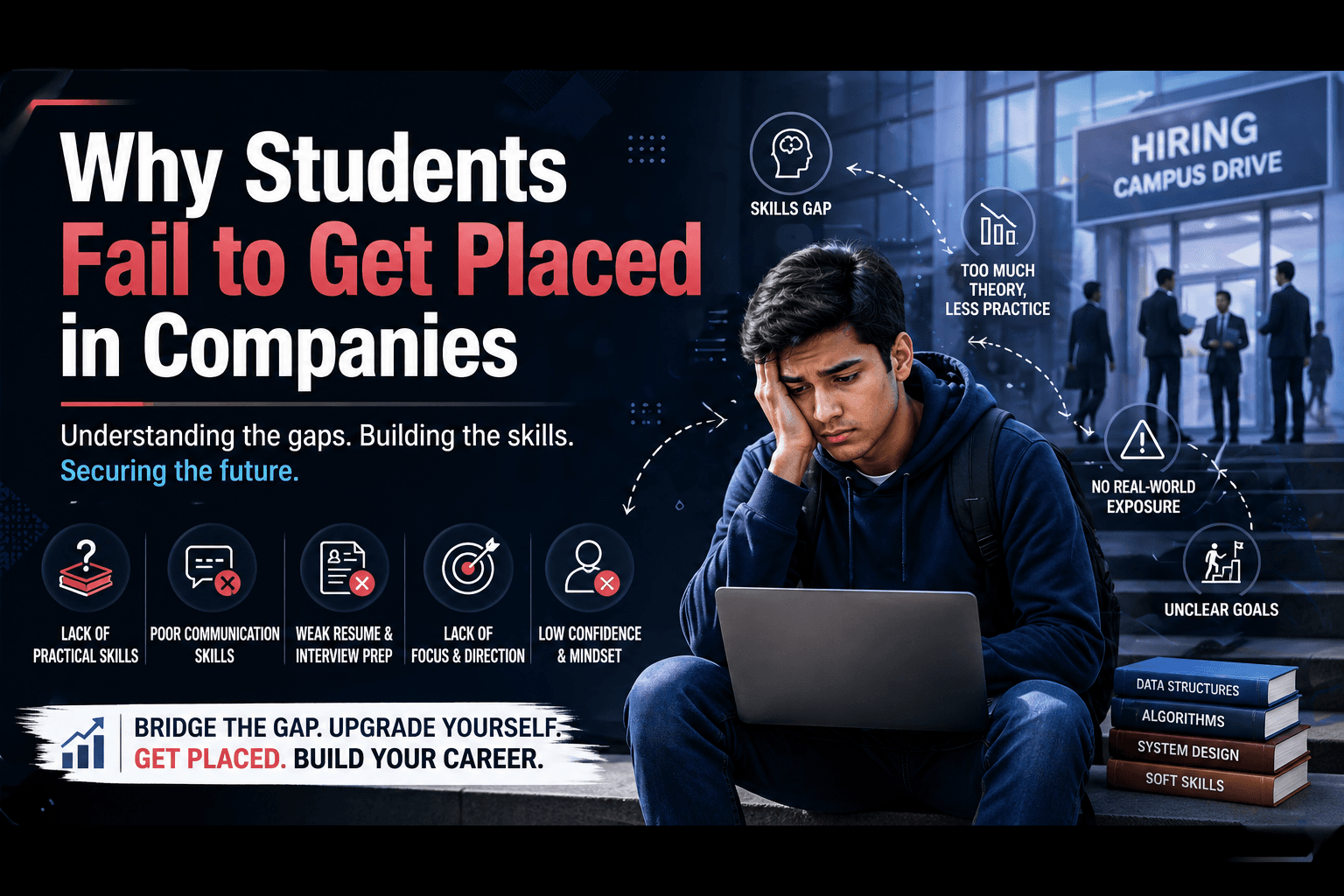
Introduction to the Placement Conundrum
The placement process has become increasingly competitive in recent years, leaving many students without job offers. To understand this phenomenon, it's essential to analyze the various factors contributing to the low placement rates. In this article, we'll delve into the reasons behind the decline in student placements and provide insights into the skills and strategies required to succeed in the job market.
The Evolving Job Market Landscape
The job market has undergone significant transformations, driven by technological advancements, shifting industry needs, and changing employee expectations. Some key factors influencing the placement landscape include:
- Automation and AI: The integration of automation and artificial intelligence has reduced the demand for certain skills, making it challenging for students to secure jobs in those areas.
- Industry 4.0: The emergence of Industry 4.0 has created new job opportunities, but it also requires students to possess specialized skills, such as data analytics, cloud computing, and cybersecurity.
- Globalization: The increasing globalization of businesses has led to a more competitive job market, with companies seeking candidates with diverse skill sets and adaptability.
Skills Gap and Misalignment
One of the primary reasons students fail to get placed is the skills gap between their academic training and industry requirements. Many students lack the necessary skills, such as:
- Programming languages: Proficiency in programming languages like Python, Java, and JavaScript is essential for most tech jobs.
- Data analysis and interpretation: The ability to collect, analyze, and interpret data is crucial in today's data-driven world.
- Communication and teamwork: Effective communication and teamwork skills are vital for success in any profession. python
Example of a Python code snippet demonstrating data analysis
import pandas as pd import numpy as np
data = pd.read_csv('data.csv') print(data.head())
Lack of Practical Experience
Another significant factor contributing to low placement rates is the lack of practical experience among students. Many students rely solely on theoretical knowledge, without applying it to real-world problems. To bridge this gap, students should:
- Participate in internships: Internships provide hands-on experience and exposure to industry practices.
- Work on personal projects: Developing personal projects helps students apply theoretical concepts to practical problems.
- Join online communities: Engaging with online communities, such as GitHub or Stack Overflow, allows students to collaborate with peers and learn from industry experts.
Inadequate Preparation for Higher Education
The preparation and foundation laid during higher education play a crucial role in determining placement success. Students should focus on:
- Building a strong foundation: Developing a strong grasp of fundamental concepts is essential for advanced learning.
- Staying updated with industry trends: Staying informed about industry developments and emerging technologies helps students prepare for the job market.
- Seeking mentorship: Guidance from experienced mentors can help students navigate the placement process and make informed career choices.
Conclusion and Recommendations
To improve placement rates, students, educators, and industry leaders must work together to address the skills gap, provide practical experience, and foster a culture of continuous learning. By adopting a proactive approach, students can increase their chances of securing jobs in top companies and embark on successful careers. Some key takeaways include:
- Develop in-demand skills: Focus on acquiring skills that are in high demand, such as cloud computing, cybersecurity, and data analytics.
- Gain practical experience: Participate in internships, work on personal projects, and engage with online communities to apply theoretical knowledge to real-world problems.
- Stay adaptable and open to learning: Be prepared to learn new skills and adapt to changing industry needs to remain competitive in the job market.
Navigating the Placement Landscape
As we've explored the various factors contributing to the placement conundrum, it's clear that students must be proactive in developing the skills and strategies necessary to succeed in the job market. One key aspect of this is understanding the evolving job market landscape and identifying areas of growth and opportunity. By staying informed about industry trends and emerging technologies, students can position themselves for success and increase their chances of securing jobs in top companies. For instance, the rise of renewable energy and sustainable technologies has created new job opportunities in fields such as solar engineering, wind turbine maintenance, and green building design.
Strategies for Success
To navigate the placement landscape effectively, students should focus on developing a combination of technical, business, and soft skills. This includes acquiring proficiency in programming languages, data analysis, and cloud computing, as well as building strong communication, teamwork, and problem-solving skills. Additionally, students should seek out opportunities for practical experience, such as internships, hackathons, and coding challenges, to apply theoretical knowledge to real-world problems. By adopting a holistic approach to learning and development, students can increase their visibility and attractiveness to potential employers, and set themselves up for long-term success in their chosen careers. For example, students can participate in online platforms such as Kaggle, HackerRank, or Codeforces to showcase their coding skills and demonstrate their ability to work on complex projects.
The Role of Educators and Industry Leaders
Educators and industry leaders also have a critical role to play in addressing the placement conundrum. By working together to develop curriculum and training programs that are aligned with industry needs, educators can help students develop the skills and knowledge required to succeed in the job market. Industry leaders can provide valuable insights and feedback, as well as offer opportunities for internships, mentorship, and job shadowing. Furthermore, educators and industry leaders can collaborate to create innovative programs and initiatives, such as apprenticeships, boot camps, and innovation labs, that provide students with hands-on experience and exposure to real-world problems. By fostering a culture of collaboration and continuous learning, we can work together to improve placement rates and equip students with the skills and strategies necessary to thrive in the modern job market.
Share this post